

AI Integration Services for Your Existing Systems
For product and IT teams adding AI to existing applications and business workflows. We connect suitable AI models with your systems and data, validate the integration on a focused use case, and take it from proof of concept to production with access controls and monitoring.
Share the systems you use, the workflow you want to improve, and your data access requirements.
Test
Validate the use case with your data before committing to a full rollout.
Connect
Connect AI with the tools and workflows your team already uses.
Scale
Measure quality, response times, and running costs as usage grows.
Put AI to work in your existing workflows
Boost your customer service
Connect AI assistants with your knowledge base and support tools, with a clear handoff to your team.
Speed up conceptual work
Turn briefs and sketches into drafts your team can review and refine.
Create extraordinary content
Generate and adapt content using your brand guidelines and a human review process.
Write code more efficiently
Support development tasks with AI assistance and keep code review in your delivery process.
Make your meetings more meaningful
Turn transcripts into summaries and action items for your existing collaboration tools.
Increase your app’s accessibility
Add image descriptions and language assistance, then validate them with your users.
Find the right AI integration use case
Let's talk your vision throughThe right AI model for your business
Choosing an AI model means balancing answer quality, response time, operating costs, and data requirements. We help you evaluate the options against your actual use case.
Test with your data
Compare models on representative tasks and examples from your business, using clear success criteria.
Balance quality and cost
Identify where a smaller, faster model is sufficient and where more advanced capabilities justify the additional cost.
Choose how it runs
Assess managed APIs, cloud deployments, and self-hosted models against your security, infrastructure, and maintenance requirements.
Data security built into your integration
Plan what data the integration can access, where it is processed, and who can use its outputs. We assess deployment options, access controls, retention, and logging against your requirements. Security and compliance depend on the complete solution and its configuration, not the model provider alone.
From AI integration idea to production
A practical path from validating your use case to operating a reliable AI integration.Integration assessment
Review your workflows, systems, and data to identify where AI can add measurable value.
Discovery and planning
Define the integration scope, data access, success criteria, and risks before implementation.
Proof of concept
Test feasibility on a focused use case before expanding the investment. Validate the chosen model and integration approach using your data.
Quality and cost optimization
Evaluate prompts, retrieval, and model choices against representative tasks. Track quality, latency, and expected running costs.
Production integration
Connect the validated solution with your application, APIs, and business systems. Include access controls, testing, and a rollout plan.
Monitoring and maintenance
Monitor output quality, failures, usage, and costs after launch. Re-test the integration when models, data, or business requirements change.
Ready to connect AI with your business?
Let’s talk your vision through!Explore AI integration use cases
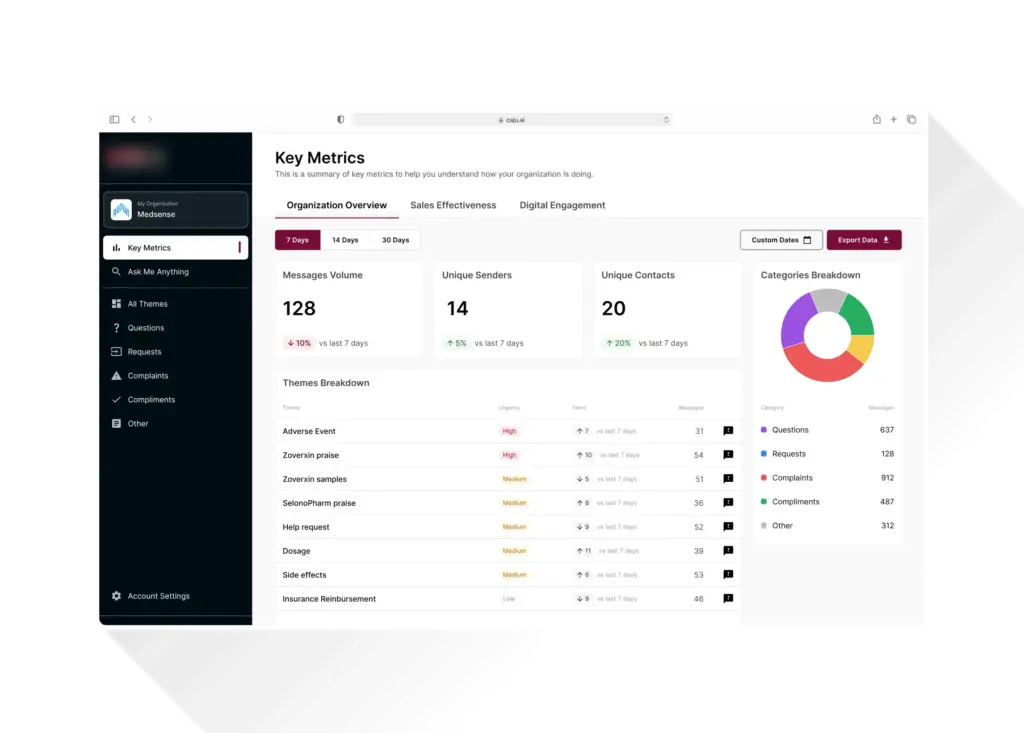

Gen AI turning customer interactions into actionable intelligence
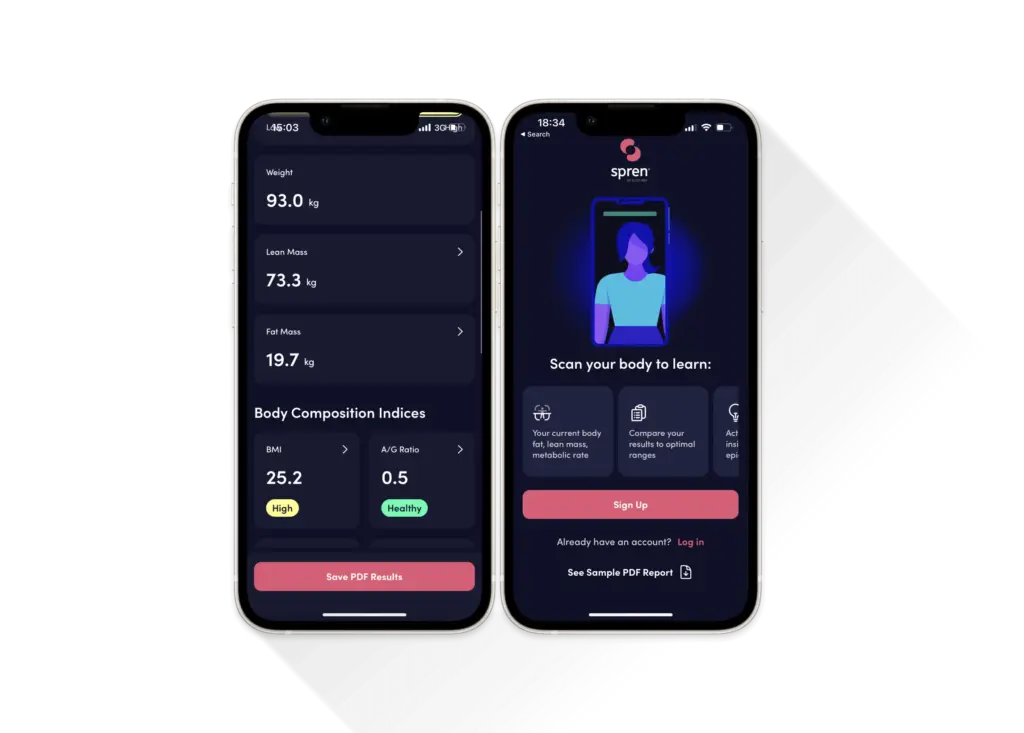
Spren’s virtual training assistant
Duolingo’s interactive virtual tutor

Virtual assistance for the visually impaired

Fraud detection on community platforms

We were looking for a company with a decent amount of AI experience in development. We were impressed that Neoteric team could deduce what we wanted and deliver beyond our expectations.
Alexander Ott, Aegis Consent
Let’s get started!
Frequently asked questions about AI integration
How long does an AI integration project take?
The timeline depends on the use case, data readiness, available APIs, and security requirements. A focused proof of concept has a different scope from an integration used across multiple systems.
After discovery, we define milestones for validation, implementation, testing, and rollout, with clear acceptance criteria.
How much does AI integration cost?
There are two main cost components: building the integration and operating it. Implementation costs depend on the workflows, systems, and controls involved. Running costs depend on model usage, infrastructure, data processing, and maintenance.
We use representative requests and expected traffic to estimate operating costs, then validate those assumptions during the proof of concept.
Which AI model should we use — and do we need GPT?
The best choice depends on your tasks, data, budget, and deployment requirements. GPT may be a good fit, but it is one of several options.
We start by defining what a successful result looks like, then test suitable models on representative examples from your business. We compare output quality, response times, expected running costs, and data handling requirements before recommending a solution.
Where appropriate, we can use different models for different tasks rather than relying on a single model for the entire application.
How do you protect our data during AI integration?
We start by identifying which data the integration needs and which restrictions apply. The solution should limit access, protect credentials, and define how data is processed, retained, and logged.
We assess provider terms and deployment options against your requirements and plan access controls, human review, and monitoring where appropriate.
Can you integrate GPT or other AI models with our existing systems?
Yes. We can connect AI models with existing applications, CRM and ERP systems, document repositories, and internal workflows. The approach depends on the APIs, data access, and permissions available in your environment.
For a GPT-based integration, we connect to an appropriate model API rather than treating the ChatGPT interface as the integration layer. We validate the end-to-end workflow and define what happens when the model cannot complete a task reliably.
Learn about other services offered by Neoteric
AI development services
Optimize internal processes or amaze your clients with custom AI-based products.
Generative AI Development
Enter the new era of creativity & growth with the help of generative AI.
AI Consulting
The first step to turning your AI concept into a functional product.
Haven’t found what you’re looking for? Let’s talk and see how we can help you.
Contact us: hi@neoteric.eu
Explore GPT and generative AI integration
The Future of AI is Here: Potential GPT-4 Use Cases and Early Adopter Projects
Early GPT-4 projects showed applications in language learning, accessibility, education, financial knowledge, and other business workflows. This historical review examines examples including Duolingo, Be My Eyes, Khan Academy, Morgan Stanley, and Stripe. The cases demonstrate possible uses, while successful implementation still requires validation against the specific user problem. It’s been barely a few months since…

How Much Does It Cost to Use GPT Models? GPT-3 Pricing Explained
Estimate GPT usage costs from the chosen model, input and output token volumes, prompt design, and expected traffic. Test representative requests before extrapolating monthly spend. This article’s GPT-3-era simulations illustrate the calculation method; their model names and prices are historical examples rather than current API quotations. The release of ChatGPT has caused a huge hype…

GPT-o1 vs. GPT-4o and other GPT models
Explore the differences between GPT-o1 vs. GPT-4o. Compare performance benchmarks, reasoning capabilities, and coding use cases.