Building a social media services marketplace ready for real-world validation
Social Media Hub
Project overview
The client approached us with a clear first-stage objective: build an MVP that could validate demand for a dedicated social media services marketplace. The product needed to answer two fundamental questions: would businesses be interested in using such a platform, and could they easily find the right specialist, understand their offer, and start a conversation?
At the same time, the supply side of the marketplace had to grow in a controlled way. Rather than opening the platform to every creator from day one, the client wanted an onboarding and moderation process that would protect the quality and credibility of the listings.
Our tasks

MVP scoping and product specification
We helped define the essential user journeys, agree on the first-release scope, and identify features that should be deliberately postponed. Together with the client, we prepared a detailed functional specification as well as a document defining UX/UI standards and quality criteria.

Building the core marketplace journey
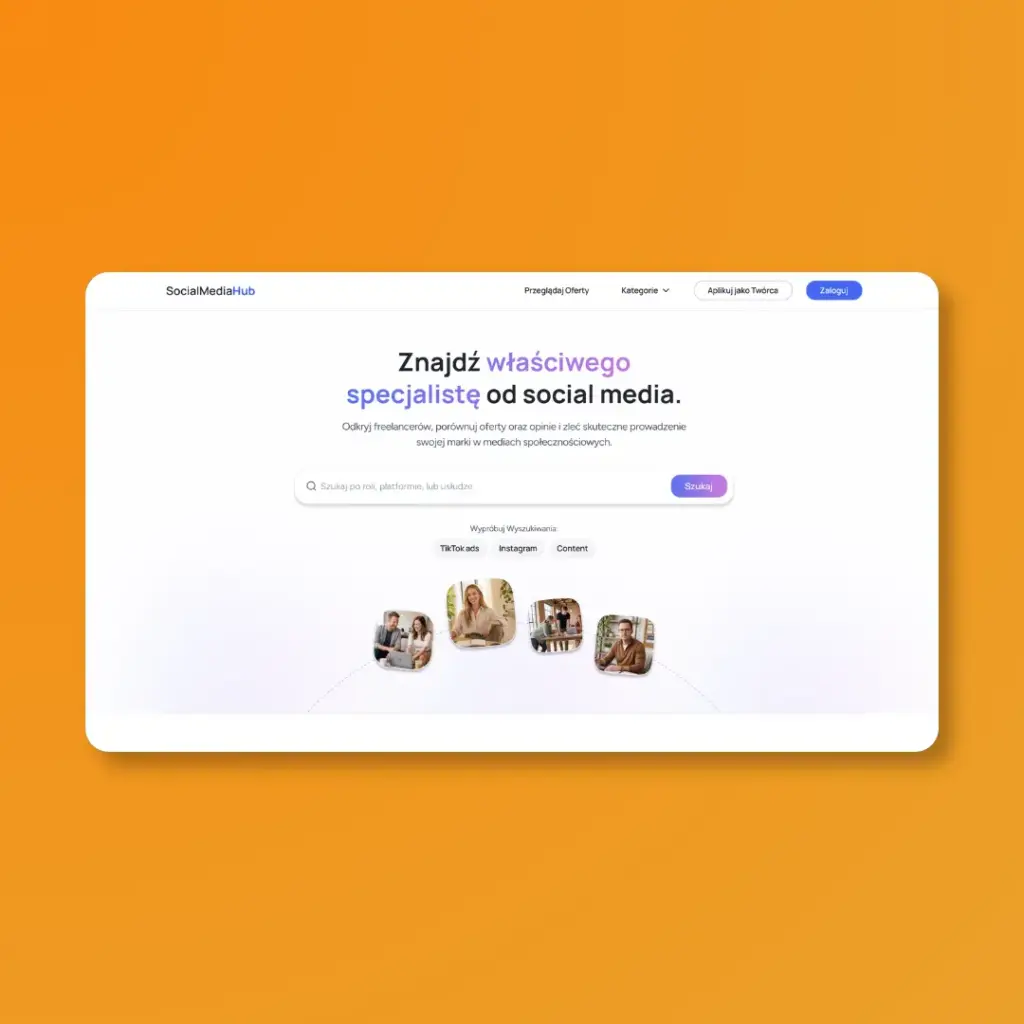
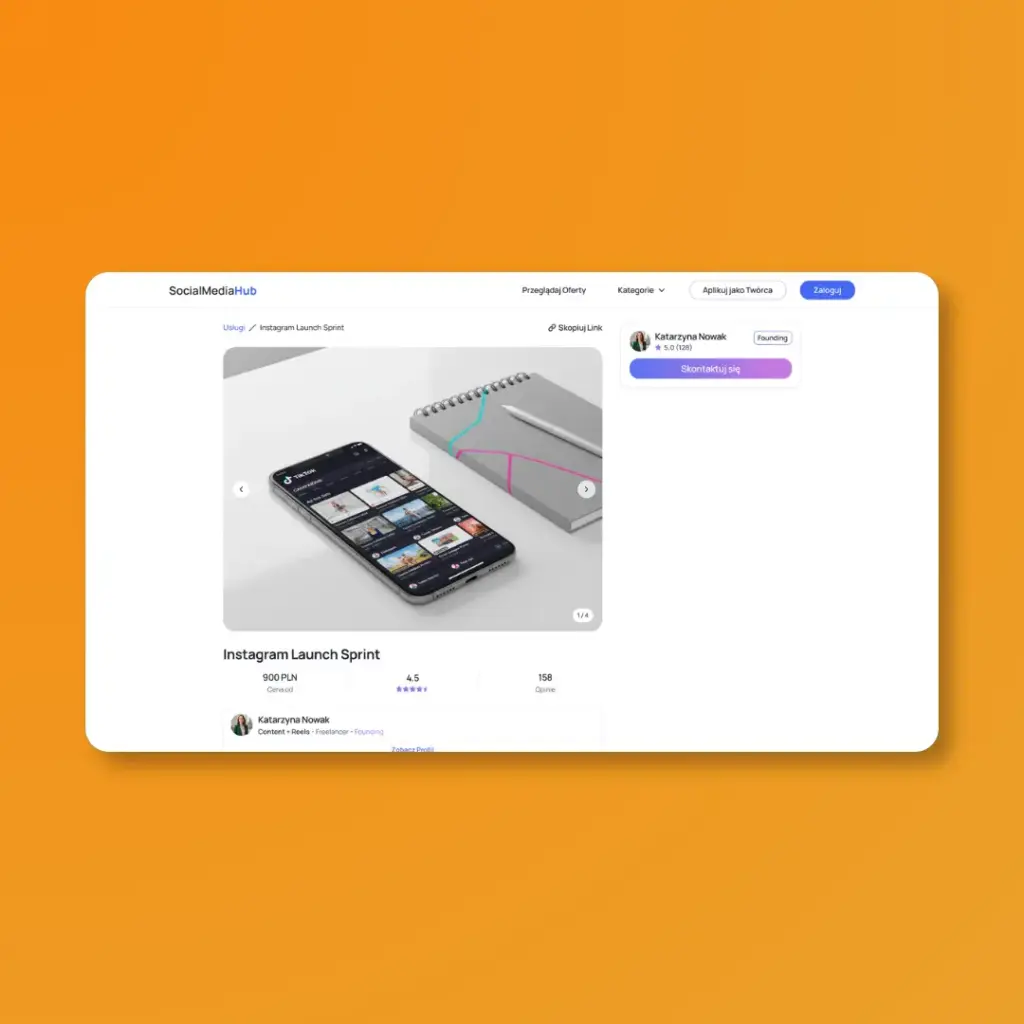
Our responsibility was to create a responsive web application covering the complete path from service discovery to direct contact. The platform had to support three distinct roles — client, specialist, and administrator — while keeping every experience simple and consistent.

Creating a controlled and credible supply side
We designed the creator onboarding flow, an application queue, and administrative moderation tools. These mechanisms allowed the client to build the specialist database gradually and maintain the expected quality of profiles and offers.

Preparing the product for learning and growth
The MVP was built as a PWA-ready foundation with technical SEO, analytics, and safeguards included from the start. This made it possible to launch a credible product, observe real user behavior, and prepare for future product and monetization decisions.
01
Goals
Validate marketplace demand
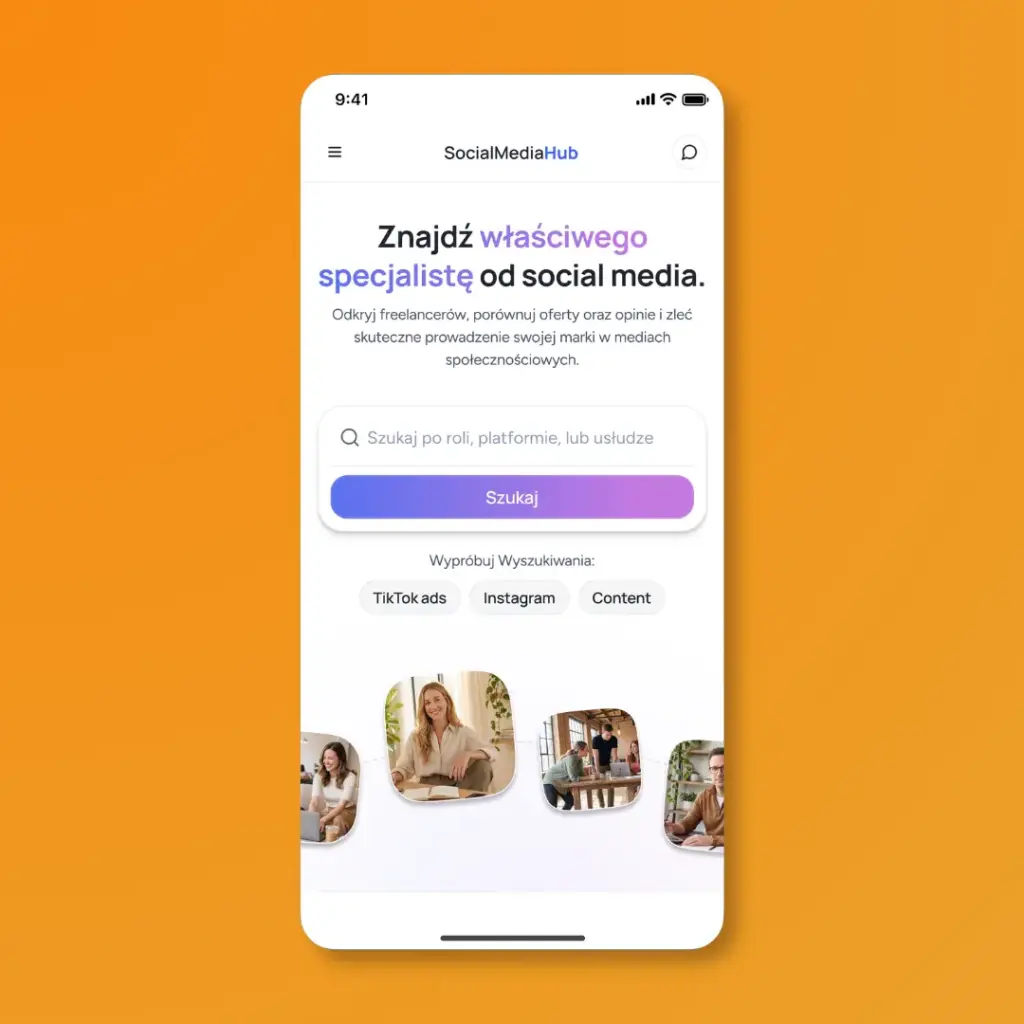
Make specialist discovery effortless
Build trust from the first interaction
Create a measurable foundation
02
Challenges
Keeping the MVP focused without weakening the core experience
Designing trust into a new marketplace
Coordinating three different user roles
Incorporating feedback without slowing delivery
03
Our approach
Defining the product before accelerating development
Working iteratively in a Time & Materials model
Using feedback as an early input
Building around the complete validation journey
04
Key MVP capabilities

Discovery and communication
- Search, filtering, and service browsing
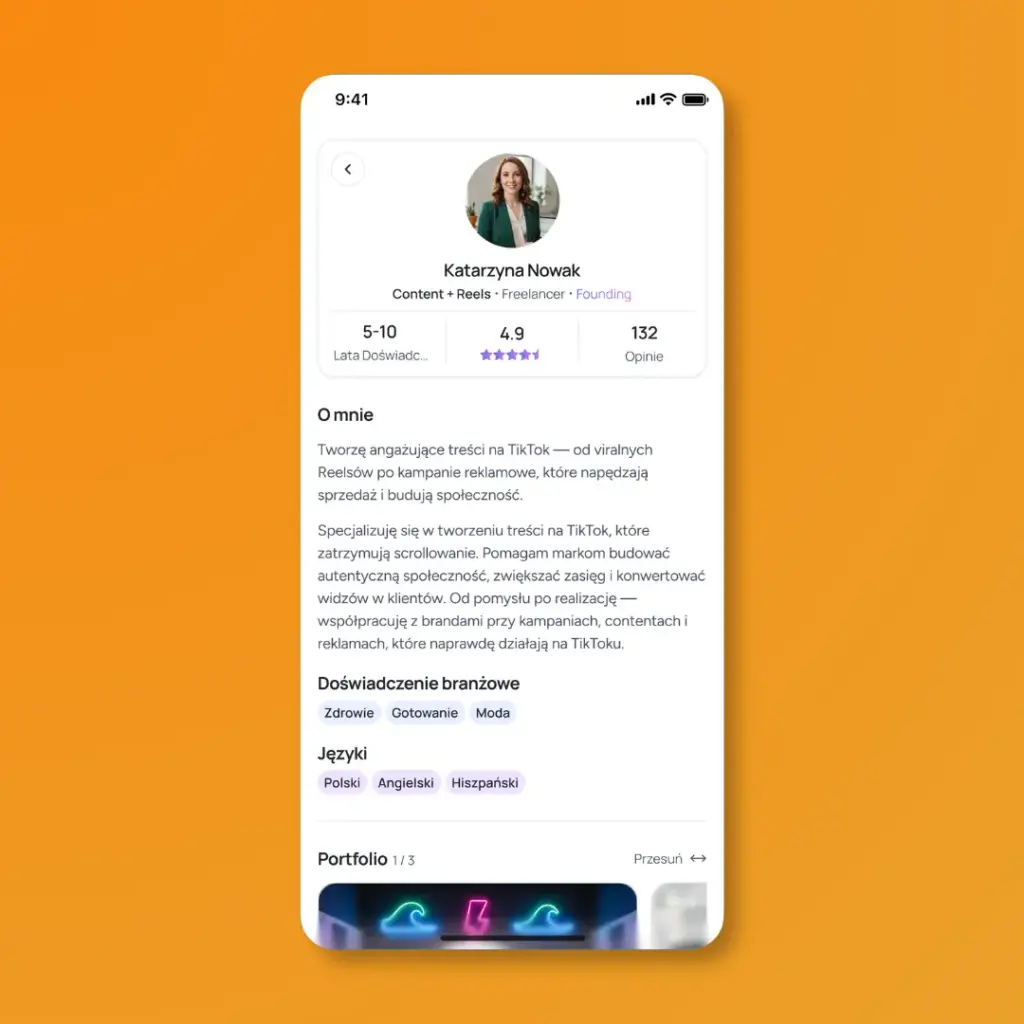
- Public specialist profiles and offer pages
- Passwordless sign-in using a one-time code sent by email
- One-to-one chat between clients and specialists
- Transactional notifications
- Reviews linked to an actual conversation
Creator and administrator workflows
- Creator onboarding and an application queue
- Profile, portfolio, and service management
- An administration panel for content moderation and user management
- Support for images and short video materials
Growth, measurement, and reliability
- Responsive, PWA-ready web application
- Technical SEO, public offer URLs, and OpenGraph previews
- Analytics for key journey stages implemented in PostHog
- Basic anti-spam protection and rate limiting
Technology we used

React

Next.js

PostHog
05
Results
A functional MVP for real market validation
The finished product supports the complete marketplace journey: users can discover a service, evaluate the offer and specialist profile, establish contact, and begin a conversation. This allows the client to test not just isolated features, but the full value proposition in real conditions.
A credible marketplace experience from day one
The platform was designed to feel like a trustworthy, customer-facing product rather than an internal tool or rough prototype. Public profiles, offer presentation, curated onboarding, media support, and moderated content reinforce that credibility.
Faster entry to the market
By limiting the first release to the capabilities required for meaningful validation, the client could launch sooner and avoid investing prematurely in features that had not yet been proven necessary.
Data for the next product decisions
PostHog analytics provides insight into the critical stages of the user journey. The client can observe behavior, identify friction, and prioritize further development using real product data.
A stable foundation for expansion and monetization
The architecture and product scope create a clear path for adding new functionality, scaling the specialist base, and introducing monetization once the marketplace model has been validated.
Conclusion
Social Media Hub demonstrates how a carefully scoped MVP can validate an entire marketplace journey without compromising product credibility. By combining controlled specialist onboarding, intuitive service discovery, direct communication, technical SEO, and behavioral analytics, the platform gives the client a practical tool for learning from the market and a stable base for the next stage of growth.
At the same time, the supply side of the marketplace had to grow in a controlled way. Rather than opening the platform to every creator from day one, the client wanted an onboarding and moderation process that would protect the quality and credibility of the listings.