Updated: November 3, 2026
Software outsourcing works best when your engineers can think with you, question a brief and help move the product forward. That’s the partnership worth looking for here: people who can turn a difficult business problem into working software, without making collaboration a second job.
Let’s put our cards on the table: if you want strong engineering, straightforward collaboration and an EU-based partner, Poland is almost certainly the best choice for your software development shortlist. Yes, we’re writing this from Poland. But there’s more to the argument than local pride. The combination is compelling, especially when you want a team you can actually build a product with, rather than simply send tickets to.
The interesting question is no longer whether Poland deserves a place on the outsourcing map. It’s what makes a Polish team worth choosing for your particular product. So let’s get past the country-ranking beauty contest and look at the things that matter on a Tuesday afternoon: good technical decisions, a conversation that moves work forward and a budget you can explain.
Why Poland belongs at the top of your shortlist
Poland’s international business services market is well past the promising-newcomer stage. ABSL’s current sector overview counts 500,500 people across 2,179 centres. That covers the broader business services sector, so no, we’re not claiming half a million software engineers are waiting for your brief. What it does show is an established ecosystem, with international business woven into its working life.
That gives you a good place to start. The next step is pleasantly unglamorous: find a team that has solved a problem like yours. Ask about a comparable project, talk to a client and meet the technical lead. A product that survived real users is a much better conversation starter than a trophy from a programming contest.
Polish software developers: engineering with substance
There’s substance behind Poland’s engineering reputation. The European Commission’s Education and Training Monitor 2025 puts ICT at 5.9% of Polish tertiary enrolments in 2023, up from 4.4% in 2015 and above the EU’s 5.5% in 2023. There are caveats: the report also flags skills shortages and below-average overall STEM participation. Still, the ICT pipeline is a real part of the story. It just doesn’t mean a senior engineer is available at the snap of your fingers.
Give the proposed engineers something interesting to chew on: your awkward integration, your performance bottleneck, the bit of the system everyone is afraid to touch. Listen to the questions they ask. A thoughtful discussion of trade-offs will tell you more than another slide declaring a passion for innovation.
From a promising idea to something people can use
Some projects need two excellent engineers. Others need help figuring out what to build in the first place. Choose your partner accordingly. At Neoteric, our services include bespoke software development, product design and AI development, so the conversation can cover both the product and the engineering behind it. The proposal should make clear which people and capabilities your project actually gets.
A modern technology stack is a nice opening line. What happens after deployment is the more revealing story. Ask how the team reviews code, tests changes, rolls back a bad release and spots trouble in production. A sensible answer beats a fashionable tool list. And a coverage percentage, however impressive on a slide, won’t pick up the phone when the product breaks.
Building with generative AI? Wonderful. Now ask what happens when the model gets it wrong. Talk about evaluation datasets, acceptable errors, human review, customer data and running costs. Ask how AI-generated code is checked, too. The useful conversation starts where the demo ends.

English-speaking teams make collaboration easier
Poland makes a strong case on English, too: EF’s 2025 English Proficiency Index places it 15th, with a score of 600 in the very high proficiency band. That describes the index’s test-taking population, rather than every person you might hire. The easiest way to assess your future team is also the most useful: have an actual conversation with them about your product.
The real prize is a team that tells you when your idea needs work. You want clear decisions, regular demos and someone willing to say, “We can build that, but here’s a better way.” Agree how risks get raised and what “done” means. Then you can spend meetings making decisions instead of translating polite ambiguity.
Nearshore software development in Poland: close enough to work together
For a UK or European company, Poland is a natural nearshoring option: a nearby team and working hours that largely line up. Poland runs on UTC+1 in winter and UTC+2 in summer, usually just one hour ahead of London. That makes room for a quick conversation while a decision is still useful, rather than another day of email ping-pong.
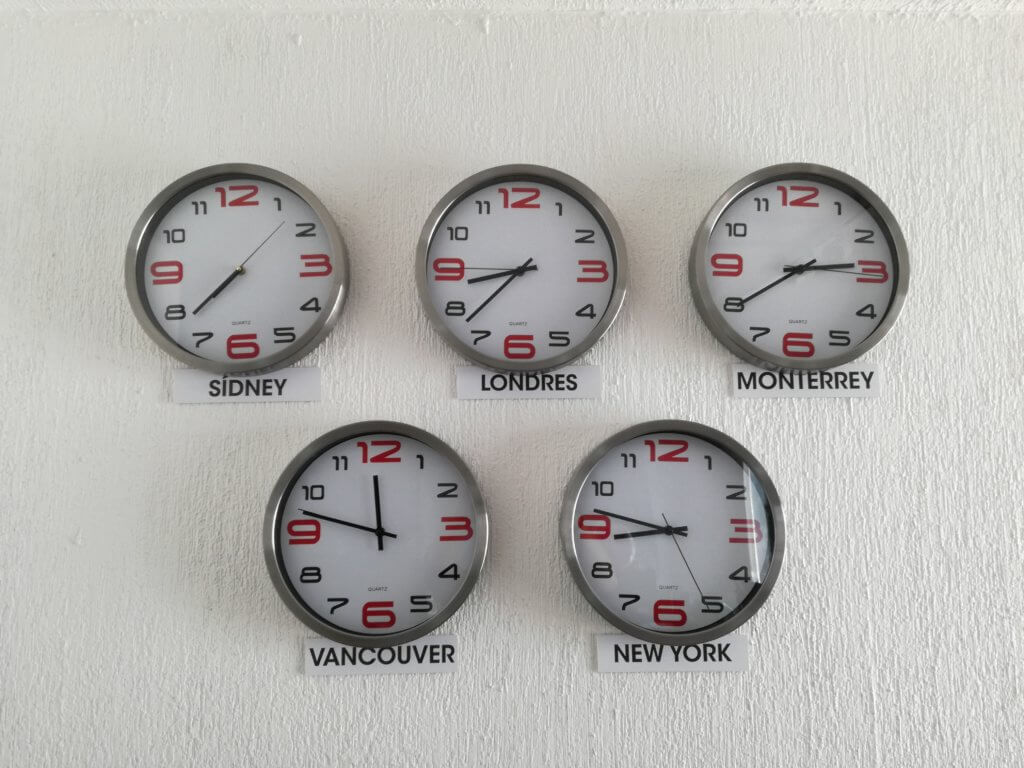
For US companies, offshore software development in Poland means planning the overlap. At 15:00 in Warsaw, it’s usually 09:00 in New York and 06:00 in San Francisco. East Coast mornings are an easy starting point; Pacific teams need an agreed meeting window. US and European clock changes happen on different dates, so check the temporary shifts. Written updates and clear ownership keep the rest of the day moving.
How much does software development outsourcing in Poland cost?
Let’s talk money. Clutch’s 2026 software development pricing guide places Poland in the $50–$99 hourly band. Useful as a starting point; less useful as your entire procurement strategy. It’s a marketplace benchmark, not a project quote or developer salary. The guide puts the US in the same band, so this particular source cannot support a blanket promise of savings over every American provider. Get comparable proposals and look at what you’re buying.
An hourly rate is the headline. The full delivery cost is the story. Ask what’s included: engineering, QA, design, project management, infrastructure, licences and support after launch. Check currency, taxes, minimum commitments and how much time your own team must contribute. For AI, add model usage and evaluation. A cheap hour becomes surprisingly expensive when you have to buy the missing work later.
Poland vs India for software development: what are you optimising for?
If your shortlist has come down to Poland or India, start with the way you want to work. For a European team that values shared working hours and an EU-based partner, we’d put Poland first. Those are concrete reasons for our preference, rather than a claim that one country has a monopoly on good engineers.
For a US company, compare the actual meeting windows, relevant project experience and full delivery proposals. A country label cannot tell you who will be on the call or what the finished product will cost. Poland makes a strong case when you want engineering and product collaboration together. Let the proposed teams show you how they would deliver it.
An EU home base is a good start. Read the paperwork, too.
An EU-based partner is a compelling part of Poland’s appeal. It also gives you some paperwork to discuss before the interesting technical work begins. Where your supplier processes personal data on your behalf, the EDPB explains that the relationship needs a contract governing that processing. Cover instructions, confidentiality, security, subprocessors, assistance with data-subject requests and what happens to the data at the end. A Polish address is a starting point, not a compliance certificate.
Follow the data, not just the office address. Where is it hosted, who can access it and which cloud services or subprocessors are involved? An EU supplier may still be part of a processing chain that sends data outside the EEA. The relevant GDPR transfer conditions still apply. Have that conversation before production data enters the picture.
There are practical limits to Poland’s appeal: continuous Pacific-hours overlap, an on-site requirement elsewhere or the lowest possible rate may point you towards another setup. Agree source-code access, handover and decision ownership early. Even an excellent Polish team still needs someone on your side who can explain the business and make the calls.
Choosing a Polish software development partner
Meet the people who would actually build your product, ask about a comparable project and discuss one difficult technical decision together. That will get you further than another beauty parade of credentials. For a useful starting point, see our guide to interviewing a potential software outsourcing provider.
Put Poland first. Then find your people.
Poland is hard to beat when you put engineering, collaboration and an EU base on the same shortlist. That’s our view, and we’re happy to stand behind it. The final choice gets more personal: you’re choosing the people who will challenge an assumption, explain a difficult decision and help your product through its next awkward stage. Meet them before you sign.
That’s the conversation we’d like to have at Neoteric. Bring us the business goal, the system you already have and the problem that keeps resurfacing in planning meetings. We can explore where bespoke software development, product design or AI development would help, and what a sensible first step looks like. Tell us what you’re trying to build.
Frequently asked questions
Is Poland a good place to outsource software development?
Yes. For a business looking for strong engineering, an EU-based partner and practical collaboration with Europe, we’d put Poland right at the top of the shortlist. Then meet the actual team and check its relevant work, delivery habits and commercial terms.
What are software development rates in Poland in 2026?
Clutch lists a $50–$99 hourly band for Poland in its 2026 pricing guide. Treat it as a starting benchmark and request a scoped estimate covering the full delivery team and ongoing costs.
Can a Polish team work with a US company?
Absolutely. Agree on a shared meeting window, response expectations, and written updates. New York is generally easier to align with than San Francisco, where someone may need to shift their schedule, but it’s always a matter of coming to an agreement. Remember the temporary gaps caused by different daylight-saving dates.
Does outsourcing to Poland guarantee GDPR compliance?
No. Verify the processing agreement, security measures, subprocessors and any transfers outside the EEA against the actual project. EU location is one part of that assessment.